About Social Work Ambassadors (SWA)
We empowering communities, advocate for rights and promote human dignity.
What is SWA?
Social Work Ambassadors (SWA) is an independent, non-governmental, and non-profit organization committed to advancing the principles and values of social work through rights-based, collaborative, and community-focused initiatives. Founded in the Kurdistan Region of Iraq (KRI) by human rights advocates and dedicated academics, SWA was officially registered with the Directorate of Non-Governmental Organizations (DNGO) on September 17th, 2024, under registration code 6155.
Rooted in a vision of dignity, justice, and equality, SWA addresses urgent social needs and fills a crucial gap—the absence of a recognized professional social work association in the region. Our work supports individuals and communities who face systemic marginalization, vulnerability, and inequality, ensuring that no one is left behind.
Our vision
We envision a world where every individual is valued and supported—where social justice, equality, and human dignity are foundational. We envision a vibrant, self-sustaining society where all people can access the opportunities and resources they need to thrive and contribute positively.
Our mission
Our mission is to empower communities through inclusive social work. We partner locally and globally to support marginalized groups, promote compassion, and drive change—building a healthier, fairer society through ongoing advocacy, community engagement, and a commitment to justice.
Our Objective
We aim to strengthen individuals and communities through purposeful social work initiatives, grounded in positive action, ongoing development, and capacity-building.
SWA Mechanism
We aim to strengthen individuals and communities through purposeful social work initiatives, grounded in positive action, ongoing development, and capacity-building.
Why We Exist?
SWA was born in response to three pressing challenges:
- The lack of a formal, professional body for social workers in the region.
- Growing social needs in underserved communities.
- The broader non-recognition of the social work profession in public and institutional spheres.
Our goal is to elevate the field of social work and ensure it plays a central role in sustainable development, community resilience, and human rights advocacy across the Kurdistan Region and beyond.
Our Team & Leadership
Social Work Ambassadors is led by a dedicated group of professionals from diverse social, academic, and humanitarian backgrounds. Our Board of Directors and founding members bring passion, experience, and a deep commitment to human rights and community development.
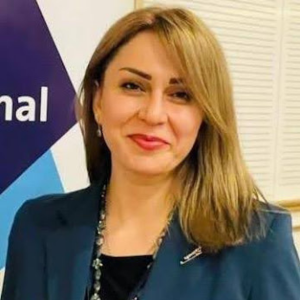
Dunya Mirdan
Director
PHD Candidate in Sociology, holding a master degree in Sociology and Social Policy from UKH, and has been teaching in Social Work Department/ College of Arts at Salahaddin University- Erbil since 2010.
BAs in Psychology, Education & English Literature. An academic and a researcher, who got an excellent recognition by Exeter university committee at UK for the academic graduation year 2010. Worked with universities of Bergen Institute for Social Anthropology, and Boston University USA on researches.
Along with the academic career, she has almost 18 years of experience in programming and project management with different humanitarian and developmental positions with various INGOs and Local CSO’s.
As a trainer so far, she has provided different trainings and workshops for international and national organizations on various topics including; community care, self-care, casework, gender equality, education & child rights, media, media & gender, case management, women protection, empowerment and women leadership.
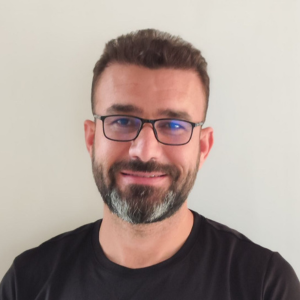
Sangar Salih
Deputy Director
Sangar Y. Salih is a lecturer in Social Work department at Salahaddin University-Erbil. He is also a research fellow at the Institute of Regional and International Studies the American University of Iraq, Sulaimani. He served as the Executive Director and Chairman of the Board of Directors of the Peace and Freedom Organization (PFO). He has worked as researcher and consultant with international organizations, research centers, and universities, including the Economic Policy Research Institute (EPRI), the International Labor Organization (ILO), and the University of Exeter, where he worked on the “Transformative History Education” project. Sangar has published his work in national and international peer-reviewed journals, focusing on social integration, peacebuilding, violent extremism, minorities, migration, workers’ rights, and the Iraqi civil society organizations (CSOs). Sangar has recently become a member of the PeaceRep’s International Advisory Board.
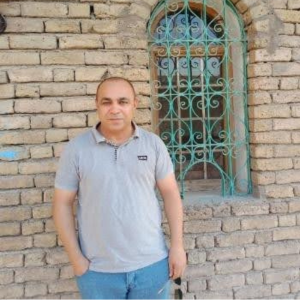
Hakim Qadir
Relations
Dr. Hakim Qadir Taha is a senior lecturer and specialist in Social Work and child protection with extensive experience in social research and humanitarian fieldwork. He began his career after earning a BA degree in Sociology, working for one year as a social researcher with Kurdish Life Aid (KLA), supported by the UK Department for International Development. In this role, he participated in health awareness campaigns on hygiene and sanitation across 92 villages and contributed to Child-to-Child programmes.
He later gained practical experience using Participatory Rural Appraisal (PRA) techniques during a three-month placement at a juvenile center funded by Save the Children Fund (UK), where he facilitated child expression through storytelling and drawing. Subsequently, he served as a field operations officer with the Kurdish Organization for Mine Awareness (KOMA), coordinating twelve teams focused on mine risk education and community safety.
While working part-time, Dr. Taha pursued his Master’s degree on “The Role of Government Institutions and NGOs in Taking Care of Physically Disabled People”, highlighted the physical and emotional abuse experienced by disabled children from caregivers. As part of this programme, he completed a three-month social work practice academic exchange at Canterbury Christ Church University (UK), where he studied social work with disabled and older people. In 2007, he was appointed as a lecturer in the Department of Sociology at Salahaddin University, where he taught courses in social problems, industrial sociology, and rural society. In 2009, with support from Ersta Sköndal University (Sweden), he played a central role in establishing the first Department of Social Work in Kurdistan at Salahaddin University. His university position facilitated deeper engagement with child welfare issues, particularly through field visits to children’s institutions and juvenile centres.
Dr. Taha earned his PhD in Social Work from Durham University, UK, in 2020. His doctoral thesis, “Child Punishment and Maltreatment in the Kurdistan Region of Iraq: Causes and Consequences – A Field Study in Erbil City,” offers a comprehensive analysis of the socio-cultural and institutional dimensions of child maltreatment in the region.
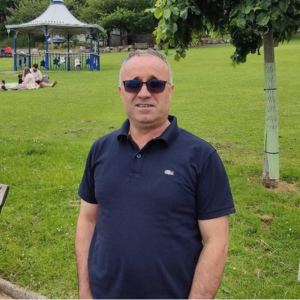
Ezadin Rasul
Senior Advisor
Dr. Izaddin Abdulsamad Rasool is an Assistant Professor of Sociology and Social Policy at Salahaddin University-Erbil, with a study focus on the sociological and social work studies of pressing social problems. He received his PhD from Bangor University (UK) in 2013, where his doctoral research provided a revolutionary study of female suicide and attempted suicide in the Kurdistan Region/ Iraq, investigating the complex social factors behind this phenomenon. Previous to his PhD, he completed both his master’s degree in Sociology (2004) and Bachelor’s degree (1998) at Salahaddin University-Erbil. He further extended his qualified knowledge concluded a Social Work Practice Certificate from Canterbury Christ Church University in the UK (2006).
Dr. Rasool’s academic career has been devoted to lecturing critical social problems through demanding, mixed-methods research. His work associations quantitative and qualitative methodologies to distribute complete understandings into complex social tasks, with conclusions published in both regional and international academic journals. His teaching portfolio includes undergraduate courses such as Social Problems, Social services,Social Statistics, and Criminology. Also, Social Security and advanced SPSS applications courses for master’s students. He has also contributed to interdisciplinary instruction by teaching Sociological Nursing at the College of Nursing, Hawler Medical University (2004). In addition, Dr. Rasool has served as a Visiting Faculty Member at Sulaimani University’s College of Humanities, where he taught Political Sociology to doctoral students and supervised PhD candidates.
Dr. Rasool’s contemporary research benefits center on social problem analysis, suicide prevention strategies, evidence-based social policy, Domestic violence, and mixed-methods research project. His work aims to bridge the gap between research and practice, contributing to both academic familiarity and practical results for talking social Problems in the Kurdistan region.
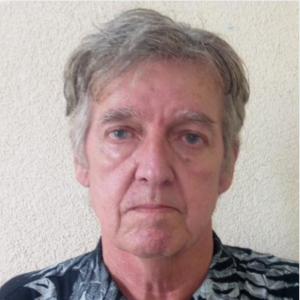
Prof. Martin O’Rielly
International Senior Advisor
Professor Martin Gerald O’Reilly is an accomplished scholar and higher education expert with extensive international experience spanning over four decades. He holds a Doctor of Philosophy (PhD) from the University of Leeds, United Kingdom, with a research focus on the cultural influences shaping staff training in local and international NGOs across West Africa.
Prof. O’Reilly has served in senior academic and administrative capacities across multiple institutions, including Kampala International University (Uganda and Tanzania), Uganda Martyrs University, and the Virtual University of Uganda. As Executive Director of the Institute of Open and Distance Learning, he led the development and delivery of a range of undergraduate and postgraduate programmes in educational management, peacebuilding, conflict resolution, development studies, and guidance and counselling.
He is widely recognized for his expertise in curriculum development, distance and online learning systems, and institutional capacity building. His consultancy portfolio includes work with national and international bodies such as the European Union, UNDP, the Open University of Namibia, and the Independent Joint Anti-Corruption Monitoring and Evaluation Committee (Afghanistan). He has also developed professional toolkits and training programmes for universities, government ministries, NGOs, and multilateral organizations in over 15 countries.
Professor O’Reilly is a prolific author and trainer, with numerous published training manuals, institutional development guides, and peer-reviewed contributions in the fields of educational leadership, gender mainstreaming, financial education, and good governance. His academic and practical contributions continue to shape policy and practice in education and institutional strengthening across Africa and beyond.
Work With Us
Are you an organization or individual ready to partner for social change? Let’s collaborate.